Custom Vintage Engagement Ring
Vintage-inspired engagement rings combine details associated with earlier jewelry periods with the advantages of a newly designed setting. Choose from Art Deco geometry, delicate milgrain, engraved patterns, open metalwork, floral elements, halos, scrollwork, and other antique-inspired features.
Browse our custom vintage engagement ring designs below for inspiration. We can modify any design shown here, combine details from several rings, or create something entirely new around your preferred center stone, metal, ring size, and budget.
Each ring can be adjusted through its stone shape, setting height, band width, accent stones, engraving, profile, and wedding-band fit. Before production begins, you will receive detailed CAD renderings so you can review the design from multiple angles.
Showing all 34 results
-
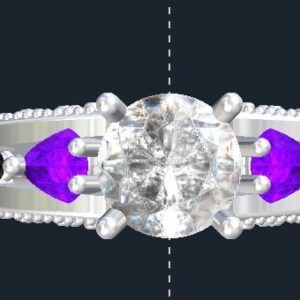
3 Stone Art Deco Engagement Ring
-
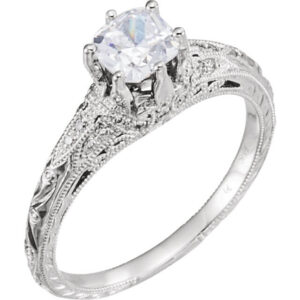
6 Prong Art Deco Engagement Ring
-
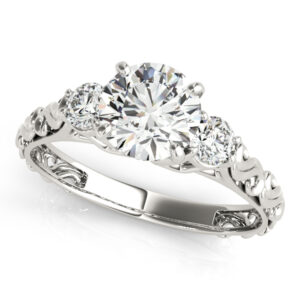
Art Deco 3 Stone Engagement Ring
-
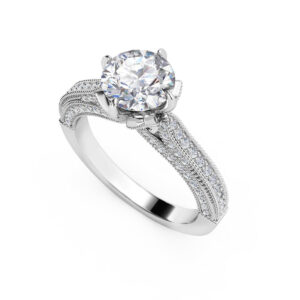
Art Deco Floral Engagement Ring
-
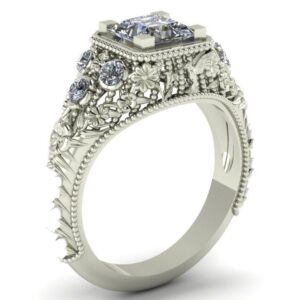
Art Deco Floral Hummingbird Ring
-
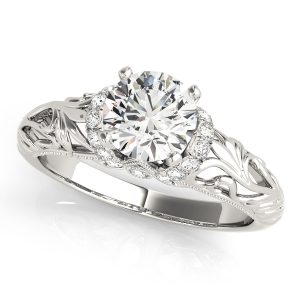
Art Deco Halo Engagement Ring
-
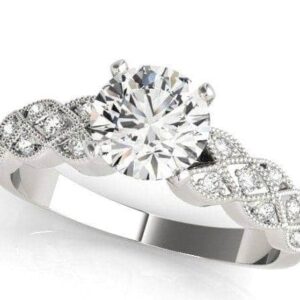
Art Deco Milgrained Engagement Ring
-
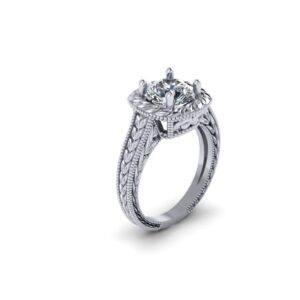
Art Deco Solitaire Engagement Ring
-
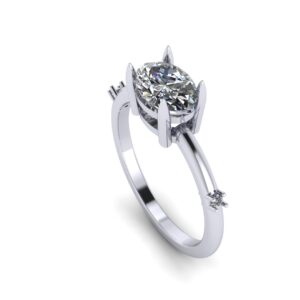
Asymmetrical Engagement Ring
-
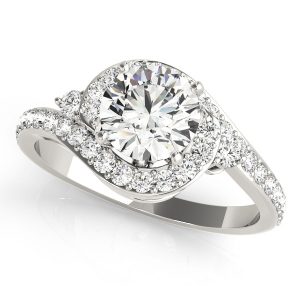
Bypass Halo Engagement Ring
-
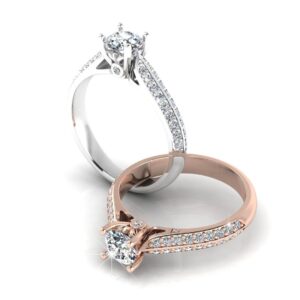
Cathedral Diamond Engagement Ring
-
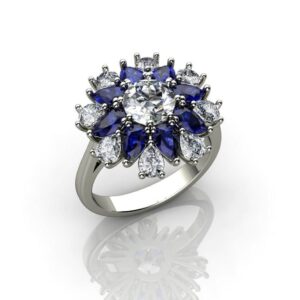
Diamond & Sapphire Floral Ring
-
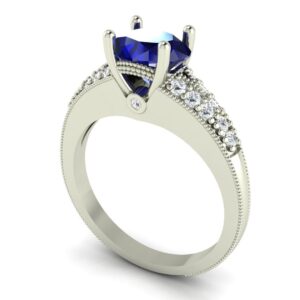
East West Engraved Split Shank Engagement Ring
-
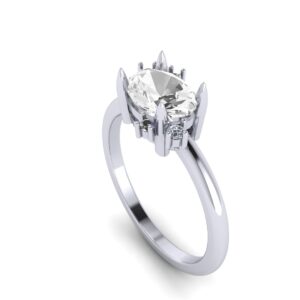
East West Oval Engagement Ring
-
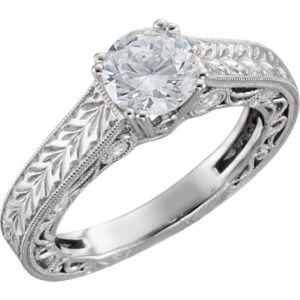
Engraved Vintage Engagement Ring
-
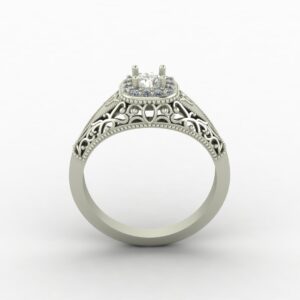
Hand Engraved Art Deco Halo Engagement Ring
-
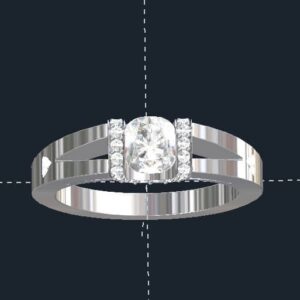
Hand Engraved Vintage Halo Engagement Ring
-
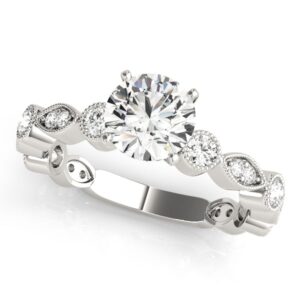
Milgrain Engagement Ring
-
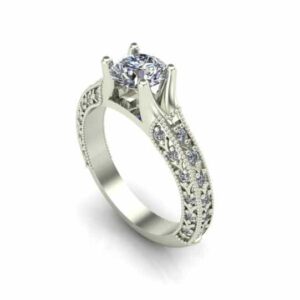
Milgrained Art Deco Engagement Ring
-
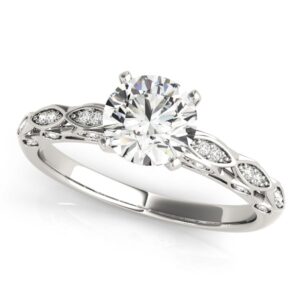
Modern Filigree Engagement Ring
-
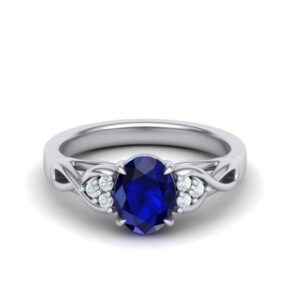
Oval Cluster Engagement Ring
-
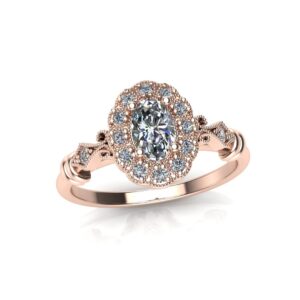
Oval Vintage Halo Ring
-
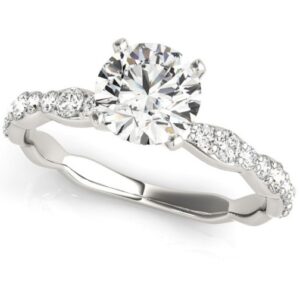
Scalloped Engagement Ring
-
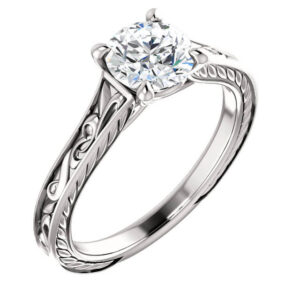
Scrolled Vintage Engagement Ring
-
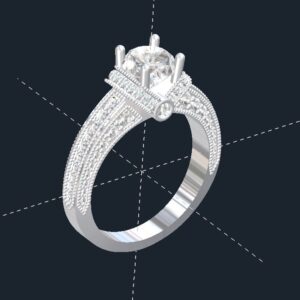
V Halo Vintage Engagement Ring
-
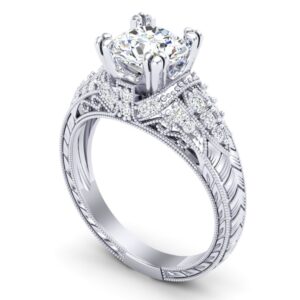
Vintage Art Deco Engagement Ring
-
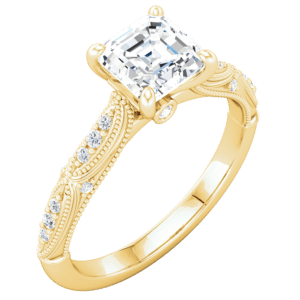
Vintage Cathedral Engagement Ring
-
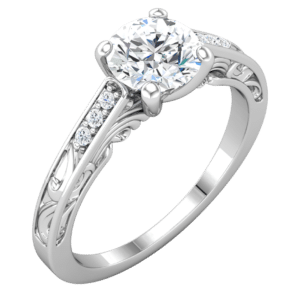
Vintage Cathedral Solitaire Ring
-
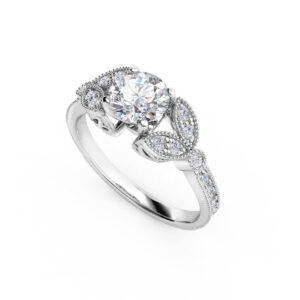
Vintage Floral Engagement Ring
-
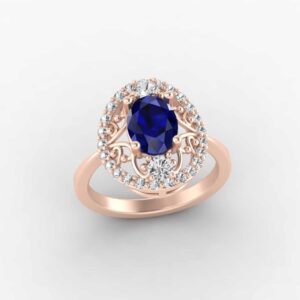
Vintage Halo Ring
-
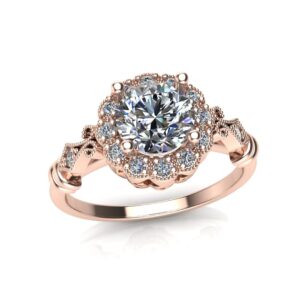
Vintage Milgrained Halo Ring
-
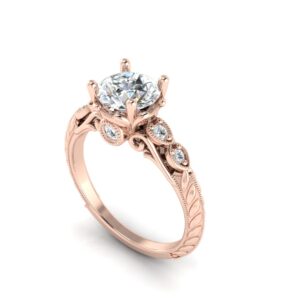
Vintage Rose Gold Engagement Ring
-
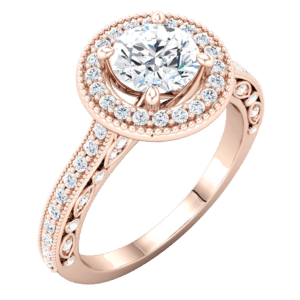
Vintage Round Halo Engagement Ring
-
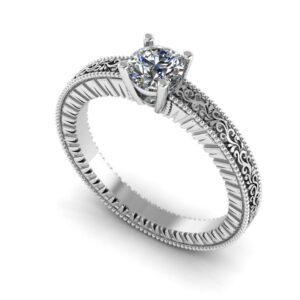
Vintage Scrolled Solitaire Engagement Ring
What Is a Custom Vintage Engagement Ring?
The rings in this collection are newly made rather than antique or estate jewelry. The term vintage can also refer to a modern ring that incorporates the proportions, decorative techniques, stone arrangements, or design language associated with an earlier period.
A custom vintage engagement ring does not need to reproduce one historical style exactly. It may combine Art Deco geometry with floral engraving, place an oval diamond in an Edwardian-inspired setting, or add milgrain and scrollwork to a modern solitaire. custom vintage engagement ring design allows you to use the historical details you like without being restricted to the construction or dimensions of an existing antique ring.
Victorian-Inspired Engagement Rings
Victorian jewelry included a wide range of designs because the period extended across much of the nineteenth century. Flowers, hearts, serpents, colored gemstones, symbolic motifs, and personal messages were among the recognizable elements used during the era.
A Victorian-inspired engagement ring may include yellow or rose gold, floral details, scrollwork, clusters, colored center stones, or symbolic elements incorporated into the band. These details can be used prominently or reduced to a small pattern beneath the center stone.
The design does not have to feel overly ornate. A simple solitaire can take on a Victorian character through an engraved band, floral basket, warm metal color, or carefully placed colored gemstones.
Edwardian-Inspired Engagement Rings
Edwardian jewelry is known for a lighter, more delicate appearance. Platinum, diamonds, scrolls, ribbons, garlands, milgrain, and lacy openwork were strongly associated with the period.
An Edwardian-inspired ring may use fine borders, pierced galleries, scalloped halos, floral patterns, and small accent diamonds to create depth without making the ring appear heavy. White gold can provide a similar overall color when platinum is not preferred.
These rings often contain considerable detail when viewed from the side. The basket, shoulders, and gallery can be just as important to the design as the view from above.
Art Deco Engagement Rings
Art Deco jewelry developed during the 1920s and 1930s and is recognized for strong geometry, symmetry, linear patterns, and contrasting colors. Designers frequently used platinum or white gold with diamonds, sapphires, emeralds, rubies, onyx, and other contrasting materials.
An Art Deco engagement ring may include stepped halos, repeating geometric shapes, baguette or tapered side stones, sharp borders, fan patterns, or strong lines extending along the band.
The style can be bold and architectural or relatively understated. A single center stone with a geometric gallery and milgrained band can suggest the period without requiring an elaborate multi-stone design.
Milgrain, Filigree, and Engraving
Milgrain is a row of small bead-like details added along an edge or border. It can frame gemstones, define a halo, emphasize an engraved pattern, or separate sections of the ring.
Filigree refers to delicate decorative metalwork, often incorporating open spaces, curls, leaves, or lace-like patterns. It can appear beneath the center stone, along the shoulders, or throughout the band.
Engraving cuts patterns directly into the metal. Depending on the desired result, it may be produced by hand, laser engraved, incorporated into the CAD design, or created through a combination of techniques.
These details are related but not interchangeable. A ring may contain one of them or combine all three. We can adjust the amount of decoration so the ring looks detailed without becoming visually crowded.
Custom Vintage Solitaire Engagement Ring
A solitaire uses one principal center stone, but that does not require a plain mounting. The band, basket, prongs, shoulders, and gallery can provide substantial vintage character without surrounding the center stone with a halo.
A vintage solitaire may include an engraved shank, milgrained borders, a cathedral profile, floral prongs, an open gallery, scrollwork, or geometric detailing. The design can look simple from above while revealing more elaborate work from the side.
This is a good approach for someone who wants the center stone to remain the focus but finds a standard polished solitaire too plain.
Custom Vintage Halo Engagement Ring
A halo surrounds the center stone with smaller diamonds or gemstones. In a vintage-inspired ring, the halo may be scalloped, geometric, floral, milgrained, engraved, or shaped around an unusual center stone.
The halo can increase the ring’s overall visual coverage and provide additional room for period-inspired detail. It can also be raised, recessed, interrupted by decorative metalwork, or combined with a second hidden halo beneath the center setting.
The center and halo stones should be proportioned carefully. A halo that is too large can overwhelm the center stone, while one that is too small may not create enough visual separation.
Custom Vintage Three-Stone Engagement Ring
A three-stone engagement ring places one stone on each side of the center. The side stones may match the center shape or provide contrast through pears, baguettes, kites, trapezoids, rounds, or other cuts.
Art Deco designs often work particularly well with geometric side stones, while Victorian- or Edwardian-inspired rings may use rounded shapes, floral settings, or more delicate arrangements.
The relative sizes of the three stones affect the appearance. Smaller side stones place greater emphasis on the center, while larger side stones create a broader and more substantial ring.
Vintage Cathedral and Low-Profile Settings
A cathedral setting uses metal arches that rise from the band toward the center stone. Those arches can be engraved, milgrained, pierced, or incorporated into scrollwork and other decorative patterns.
Cathedral designs often create a more prominent side profile and can provide space beneath the center stone for hidden diamonds or additional metalwork. A lower basket can create a more compact ring that catches less easily during everyday wear.
Neither profile is automatically better. The choice should reflect the center stone’s dimensions, the design, the wearer’s routine, and the type of wedding band that will be worn beside it.
Choosing the Center Stone
A custom vintage engagement ring can be designed around a natural diamond, lab-grown diamond, moissanite, sapphire, ruby, emerald, or another suitable gemstone.
Round, oval, cushion, emerald, Asscher, radiant, pear, marquise, princess, and other shapes can all work in a vintage design. The shape influences the surrounding details. Emerald and Asscher cuts often complement geometric Art Deco settings, while ovals, cushions, and rounds work with a broad range of periods and styles.
Colored gemstones can create stronger contrast and make the ring feel more closely connected to a particular historical influence. The durability of the stone, setting style, and way the ring will be worn should also be considered.
Choosing the Metal
Yellow gold creates a warmer appearance and works especially well with floral, engraved, Victorian-inspired, and two-tone designs. Rose gold can soften geometric details or add color to a romantic, nature-inspired ring.
White gold and platinum provide a bright neutral background and are commonly used for Edwardian- and Art Deco-inspired designs. Their color allows diamonds and fine metal details to blend into a more unified appearance.
Two-tone construction can combine a white-metal center setting with a yellow- or rose-gold band. Contrasting metals may also be used to define borders, patterns, flowers, or other selected parts of the design.
Designing Your Cstom Vintage Engagement Ring Diamond Or Gemstone You Already Own
We can often create a new vintage-inspired setting around an existing diamond or gemstone. The stone may come from inherited jewelry, an older engagement ring, or a loose stone you purchased separately.
The design must be based on the stone’s exact dimensions rather than carat weight alone. Its shape, depth, girdle, condition, and vulnerable areas can affect the safest setting style.
An inherited stone does not require the new ring to resemble the original piece. The connection can remain in the gemstone while the setting is completely redesigned around your own preferences.
Planning for a Wedding Band
Consider the wedding band before approving the custom engagement ring design. A tall basket or open cathedral setting may allow a straight band to sit closely beside the ring. A low setting, wide halo, or projecting decorative detail may require a curved or fitted band.
A gap between the two rings is not necessarily a problem, but it should be intentional. Tell us whether you prefer a flush fit, a visible space, or a custom-contoured wedding band.
When both rings are designed together, the wedding band can be created around the engagement ring’s exact CAD dimensions. This allows the curves, stones, patterns, and metalwork to align properly.
Balancing Detail With Everyday Wear
Very fine detail can make a vintage-inspired ring visually interesting, but the ring must still be practical to manufacture, set, polish, maintain, and wear.
Thin openwork, delicate edges, tall exposed stones, deep recesses, and extensive pavé may require more care than a simpler design. Tiny patterns that appear clearly in an enlarged image may also need to be adjusted so they remain visible after casting and polishing.
We can simplify, enlarge, lower, or reinforce particular details while preserving the overall style. The goal is to create a ring that looks appropriately detailed at its actual size rather than only in a magnified rendering.
How the Custom Design Process Works
The process begins with your ideas, inspiration images, preferred stone, metal, ring size, and budget. You can select one of the rings shown above, combine details from several examples, or describe a completely new design.
Once the specifications and price are established, a deposit is required to begin the CAD design. Detailed renderings allow you to review the ring’s proportions, stone placement, engraving, setting height, and other features before production.
Reasonable changes can be made during the design stage. After approval, the ring is manufactured in the selected metal, polished, engraved or textured when applicable, set with the center and accent stones, and inspected. Your existing ordering process already emphasizes discussing the idea, reviewing renderings, and approving the design before the finished piece is produced.
What Determines the Price?
The price of a custom vintage engagement ring depends on the center stone, accent stones, metal, ring size, finished weight, stone-setting requirements, and complexity of the design.
A relatively simple engraved solitaire will generally require less labor than a ring with a detailed halo, extensive pavé, several stone shapes, hand engraving, filigree, two-tone construction, or a fitted wedding band.
If you have a target budget, we can discuss which features contribute most to the price. The stone specifications, metal, dimensions, number of accents, and amount of detail can often be adjusted while preserving the primary design.