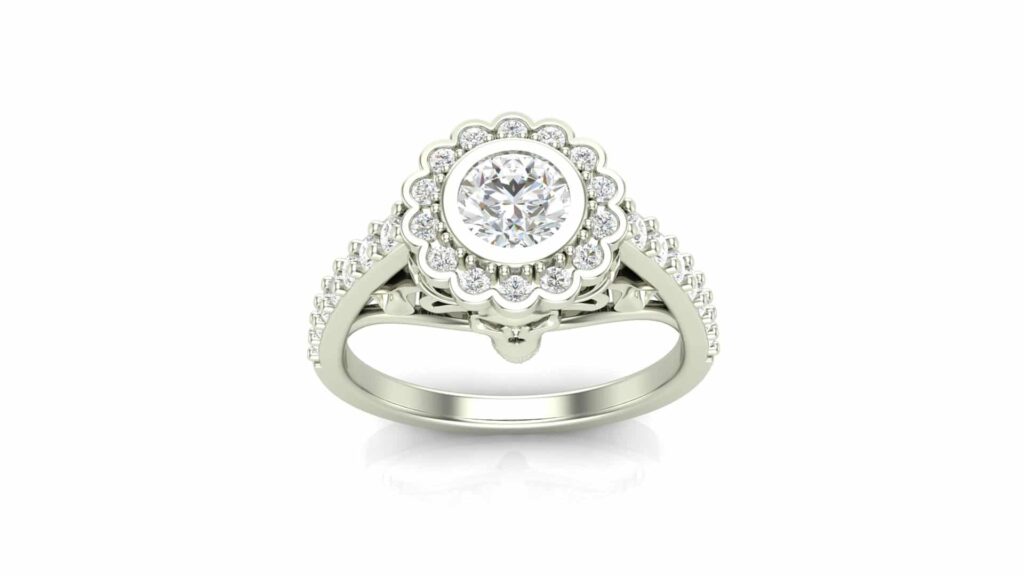
Diamond Buying Guide: Understanding the 4Cs
Buying a diamond becomes much easier when you understand which qualities affect its appearance, rarity, and price. The highest grade in every category is not necessarily the best choice for every customer. A well-selected diamond balances beauty, size, quality, and cost based on what you can actually see and what matters most to you.
This diamond education guide explains the 4Cs—cut, color, clarity, and carat weight—along with shape, grading reports, fluorescence, natural and lab-grown diamonds, and other details that can influence your decision.
How to Choose a Diamond
Begin by deciding which characteristics are most important to you. Some customers want the largest diamond their budget will allow. Others place greater value on exceptional sparkle, high color, rarity, or a particular shape.
You should also consider the jewelry design. A diamond that looks beautiful in a yellow-gold bezel may not be the same stone we would recommend for an open white-gold solitaire. The setting style, metal color, accent stones, and amount of protection around the center diamond can all affect the best combination of grades.
A grading report provides important information, but grades alone do not tell you everything about a diamond’s appearance. Two diamonds with similar reports can display different patterns of brightness, contrast, inclusions, and face-up size. Whenever possible, the diamond should also be evaluated through clear photographs, video, magnified images, or an in-person examination.
Understanding the Diamond 4Cs
The 4Cs are cut, color, clarity, and carat weight. Together, they provide a standardized way to describe diamond quality.
Cut concerns the diamond’s proportions, facet arrangement, finish, and interaction with light. Color measures the amount of visible body color in a diamond. Clarity evaluates internal inclusions and external blemishes. Carat weight measures how much the diamond weighs.
Each factor can affect price, but the four characteristics should be considered together rather than treated as separate checkboxes.
Diamond Cut
Diamond cut has a major influence on brightness, fire, sparkle, and overall appearance. A well-cut diamond directs more light back through the top of the stone. Poor proportions can allow light to escape through the sides or bottom, making the diamond appear darker or less lively.
Cut is often confused with shape. Shape refers to the diamond’s outline, such as round, oval, pear, cushion, or emerald. Cut quality refers to how successfully the diamond has been proportioned and faceted.
For standard round brilliant diamonds, GIA assigns an overall cut grade ranging from Excellent to Poor. The assessment considers brightness, fire, scintillation, weight ratio, durability, polish, and symmetry. Round brilliant diamonds are currently the only diamond shape that receives an overall GIA cut grade. Fancy shapes must be evaluated through their measurements, proportions, facet pattern, and actual appearance.
When selecting a round diamond, cut should usually receive a high priority. A larger diamond with weak light performance may be less attractive than a slightly smaller diamond with better proportions and sparkle.
Diamond Color
The traditional D-to-Z diamond color scale measures the absence or presence of yellow or brown body color. D represents the colorless end of the scale, while increasing amounts of color become visible as the grades move toward Z.
Many differences between neighboring color grades are subtle, particularly when the diamonds are viewed face-up rather than loose and upside down under controlled grading conditions. Those small distinctions can still produce meaningful differences in price.
The best color grade depends partly on the setting. White gold and platinum can make warmth more noticeable, particularly when the diamond is viewed from the side. Yellow and rose gold can make warmer diamonds appear more intentional and may allow you to choose a lower color grade without changing the overall appearance you want.
Diamond shape also matters. Some elongated and step-cut shapes can display body color differently than round brilliant diamonds. The size of the stone and the color of any surrounding accent diamonds should also be considered.
Fancy-color diamonds, including naturally pink, blue, yellow, and green diamonds, are graded under a different system. In those stones, the presence and intensity of color are desirable rather than something being minimized.
Diamond Clarity
Most diamonds contain internal characteristics called inclusions or external characteristics called blemishes. Clarity grading considers their size, number, type, location, and visibility under magnification.
The GIA clarity scale ranges from Flawless to Included. Between those ends are Internally Flawless, Very Very Slightly Included, Very Slightly Included, and Slightly Included grades. Clarity is evaluated using 10× magnification.
A high clarity grade does not always create a visible improvement once the diamond is set in a ring. Many inclusions are difficult or impossible to see without magnification. For that reason, customers frequently look for an “eye-clean” diamond rather than paying primarily for microscopic rarity.
The location and type of an inclusion can be as important as the grade. A small inclusion near the edge may be hidden beneath a prong, while a dark inclusion beneath the table may be more noticeable. Certain inclusions can also present durability concerns depending on their size and position.
Step-cut diamonds, including emerald and Asscher shapes, have broad open facets that can make inclusions easier to see. Brilliant-cut shapes often conceal inclusions more effectively because of their smaller facets and stronger light patterns.
Diamond Carat Weight
Carat is a measurement of weight, not a direct measurement of diameter or visible size. One metric carat equals 0.2 grams and is divided into 100 points. A 0.50-carat diamond may therefore also be described as a 50-point diamond.
Two diamonds with the same carat weight can appear different in size. Shape, depth, proportions, and weight distribution affect how much surface area is visible when the diamond is viewed from above. A stone that carries unnecessary weight in its depth may look smaller than another diamond of equal weight.
Price can increase sharply at popular carat-weight thresholds. A diamond weighing slightly below one of those thresholds may provide a similar visible appearance at a lower cost. However, the exact measurements and proportions should be evaluated rather than choosing solely by the number on the report.
Carat weight should also be considered in relation to the wearer’s hand, ring dimensions, setting style, and preferred overall appearance. A halo or cluster design can create greater visual coverage, while a solitaire places all attention on the dimensions of the center stone.
Diamond Shape Versus Cut
Diamond shape describes the outline visible from above. Popular choices include:
- Round
- Oval
- Cushion
- Emerald
- Radiant
- Pear
- Marquise
- Princess
- Asscher
- Heart
Cut style describes the arrangement of the facets. Round, oval, pear, marquise, and radiant diamonds generally use brilliant-style faceting intended to produce strong sparkle. Emerald and Asscher diamonds use step-cut faceting, which creates broader flashes of light and a more geometric appearance.
No single shape is best for everyone. Round diamonds are known for balanced brilliance and versatility. Elongated shapes can create greater finger coverage and may make the fingers appear longer. Step cuts offer a cleaner, more architectural look but can make color and inclusions easier to see.
Shape also affects how the stone must be protected. Pear, marquise, and princess diamonds have points or corners that should be properly supported by the setting.
Natural Versus Lab-Grown Diamonds
Natural diamonds form within the earth, while lab-grown diamonds are produced under controlled conditions using either high-pressure, high-temperature or chemical vapor deposition methods.
Both are diamonds and possess essentially the same chemical, physical, and optical properties. Their primary difference is origin. Because the growth structures are different, trained laboratories can identify them using specialized equipment.
Natural diamonds are generally selected by customers who value geological origin, rarity, and the traditional natural-diamond market. Lab-grown diamonds commonly allow customers to purchase more carat weight or higher apparent quality for the same initial budget.
The right choice depends on your priorities. Neither origin determines whether the diamond will be attractive. Cut quality, proportions, color, clarity, and the individual stone’s appearance still matter.
Natural and lab-grown diamonds should be clearly identified and accompanied by appropriate documentation when applicable. Do not confuse lab-grown diamonds with diamond simulants such as cubic zirconia or moissanite. Simulants may resemble diamonds, but they are different materials.
Understanding a Diamond Grading Report
An independent grading report documents the quality characteristics of a loose diamond. Depending on the laboratory and type of report, it may include:
- Natural or laboratory-grown identification
- Shape and cutting style
- Measurements
- Carat weight
- Color grade
- Clarity grade
- Cut grade when applicable
- Polish
- Symmetry
- Fluorescence
- Proportion information
- A diagram or description of clarity characteristics
- Comments about treatments or other identifying features
GIA natural-diamond reports include an assessment of the 4Cs as well as information about polish, symmetry, and fluorescence. Standard round brilliant diamonds also receive an overall cut grade.
A grading report is not an appraisal. It describes and grades the diamond but does not establish its retail replacement value. It is also not a guarantee that every diamond with the same grades will look identical.
The report number should be verified through the issuing laboratory’s report-checking system. Some diamonds also have the report number laser-inscribed on the girdle.
Polish and Symmetry
Polish describes the quality and smoothness of the diamond’s finished facet surfaces. Symmetry evaluates the shape, placement, and alignment of its facets.
These characteristics form part of a diamond’s overall craftsmanship. Minor differences in polish or symmetry may not always be visible without magnification, but significant issues can affect light performance and appearance.
For round brilliant diamonds, polish and symmetry are considered as part of the overall cut assessment. For fancy shapes without a standardized overall cut grade, they provide useful information but should still be considered alongside proportions, images, videos, and the diamond’s face-up appearance.
Diamond Fluorescence
Fluorescence is the visible light that some diamonds emit when exposed to ultraviolet radiation. A laboratory report may describe the intensity as None, Faint, Medium, Strong, or Very Strong.
Fluorescence is not automatically a defect. GIA research indicates that it has no widely noticeable effect on the appearance of most diamonds. In rare cases, some stones with very strong fluorescence can appear hazy or oily, so the individual diamond should be examined rather than rejected solely because fluorescence appears on its report.
Blue fluorescence may sometimes reduce the visible warmth of a diamond with a lower color grade under lighting that contains ultraviolet energy. The effect varies with the stone and lighting conditions.
Girdle, Culet, and Diamond Durability
The girdle is the narrow outer edge that separates the crown from the pavilion. It is also the area held by many prong and bezel settings.
An extremely thin girdle can be more vulnerable to chipping, particularly near the exposed points of fancy-shaped diamonds. An excessively thick girdle can retain weight without contributing proportionately to the diamond’s visible size.
The culet is the small point or facet at the bottom of the diamond. On many modern diamonds, it is described as None or Very Small. A larger culet may be visible through the top of the stone, particularly in certain antique-style cuts.
Durability also depends on the diamond’s shape, inclusions, setting, and how the jewelry is worn. A strong setting design is especially important for diamonds with pointed corners or vulnerable clarity characteristics.
Choosing a Diamond for the Setting
The center diamond and ring should be selected as parts of the same design. A setting affects how much of the diamond is visible, how well it is protected, and how its color and dimensions appear.
A solitaire leaves the center stone exposed and makes its individual characteristics more noticeable. A halo can increase the ring’s overall visual coverage and introduce a comparison between the color of the center and accent diamonds.
Bezel settings surround more of the diamond with metal and can provide added edge protection. Prong settings expose more of the stone but must be designed around its exact shape and dimensions.
Yellow or rose gold can complement diamonds with warmer color. White gold and platinum create a brighter neutral background. Two-tone designs can use a white-metal center setting with a yellow- or rose-gold band.
The setting should not be finalized around an estimated carat weight alone. Exact length, width, depth, girdle thickness, and shape variations must be considered.
Balancing Diamond Quality and Budget
The best value does not necessarily come from choosing the lowest acceptable grade in each category. It comes from understanding which differences will be visible in the finished jewelry and which exist primarily on paper.
A practical approach is to:
- Choose the shape and approximate visible size you prefer.
- Prioritize cut quality and overall appearance.
- Select a color that works with the shape and metal.
- Look for clarity that appears clean to the unaided eye.
- Compare actual measurements instead of relying only on carat weight.
- Review the grading report, photographs, and video.
- Consider the diamond together with the setting and total project budget.
There is no universal grade combination that is correct for every diamond. A carefully selected lower-color or lower-clarity stone may look excellent, while a more expensive diamond can still be disappointing if its proportions or appearance are poor.
How We Help You Select a Diamond
You do not need to become a gemologist before ordering custom jewelry. Tell us your preferred shape, approximate size, natural or lab-grown origin, setting style, and budget. We can help you understand where quality differences are likely to be noticeable and where you may be paying for characteristics that are visible mainly under magnification.
If you already have a diamond, the custom design can be created around its exact measurements. If you are still shopping, the diamond and ring design can be considered together so that the proportions, setting, metal, and overall cost remain aligned.
Our goal is not simply to find the highest grades available. It is to help you choose a diamond that looks right in the jewelry you are creating and makes sense for your priorities.
Frequently Asked Questions About Diamonds
Which of the 4Cs is most important?
Cut is often the first factor to prioritize because it strongly affects brightness and sparkle. However, the best balance depends on the diamond’s shape, setting, size, and your personal preferences.
Does a higher carat weight always look larger?
No. Carat measures weight. The visible size also depends on the diamond’s shape, measurements, depth, and proportions.
Do I need a flawless diamond?
Not necessarily. Many diamonds with lower clarity grades appear completely clean without magnification. The type and location of the inclusions are often more useful than the grade alone.
Is a lab-grown diamond a real diamond?
Yes. A lab-grown diamond has essentially the same chemical, physical, and optical properties as a natural diamond. It is created by a manufacturing process rather than forming within the earth.
Does fluorescence make a diamond undesirable?
Usually not. Fluorescence has little or no noticeable effect on most diamonds. Very strong fluorescence should be evaluated on the individual stone because rare examples may display haziness.
Should every diamond have a grading report?
An independent report is particularly valuable for significant center diamonds because it documents origin and quality characteristics. Very small accent diamonds are commonly sold without individual reports because the cost of grading each one would be impractical.
Select the Diamond That Works for Your Jewelry
A diamond should be judged by more than a grade or carat number. Its proportions, visible dimensions, light performance, inclusions, color, origin, and setting all contribute to the finished result.
Send us your preferred specifications, an inspiration image, or the design you are considering. We will help you compare the available choices and select a diamond that provides the combination of appearance, quality, and price that works for your custom jewelry.
See our Gemstone Care post for helpful tips. Learn more about custom jewelry, explore the rest of our custom pendant creations, or contact us to create a unique piece of custom jewelry. It can cost less than you think to have your very own custom creation made. Why settle for boring, uninspiring, mass-produced jewelry from the mall? We can make exactly what you want. Don’t see what you envision in our portfolio? Send us the design you want and we will bring it to life.