Skull Engagement Rings Can Be Bold or Subtle
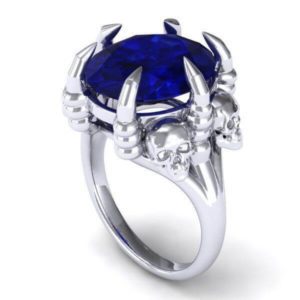
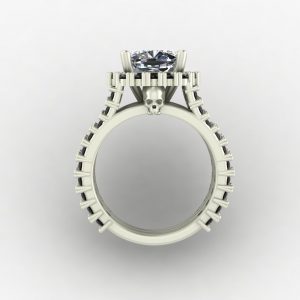
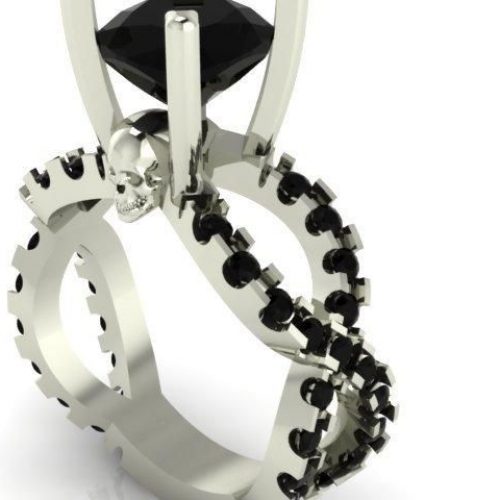
There is no single formula for a skull engagement ring. A skull can form the main structure of the ring, appear beneath the center stone, face outward from the shoulders, repeat around the band, or remain partially hidden within the gallery.
A prominent skull design may use deeply carved features, visible teeth, gemstone eyes, crossed bones, claws, smoke, flames, or other gothic elements. A subtler design might use smaller skulls beneath the center stone, incorporate a skull into the scrollwork, or hide the motif inside the band.
The amount of detail should suit the size of the ring. Features that appear clear in a large drawing may need to be simplified so they remain recognizable when produced in metal. We can adjust the skull’s proportions, expression, depth, and placement to create a design that works at the finished scale.
Choosing the Skull Style
The appearance of the skull has a major effect on the character of the ring. Options may include:
The appearance of the skull has a major effect on the character of the ring. Options include realistic human skulls, stylized or simplified skulls, gothic skulls, ancient or weathered skulls, anatomical designs, decorative skulls, mechanical or futuristic skulls, sugar-skull-inspired patterns, animal skulls, and skull-and-bone combinations.
Some skulls appear aggressive, while others are neutral, elegant, playful, or heavily ornamental. The design can also combine the skull with flowers, wings, vines, ribbons, flames, smoke, armor, Celtic patterns, or symbols that have personal meaning.
You can send us a skull from another piece of artwork as a reference, but it may need to be adjusted to fit the structure and proportions of the ring.
Center-Stone Options
A skull engagement ring can be designed around a diamond, lab-grown diamond, moissanite, sapphire, ruby, emerald, black diamond, or another appropriate gemstone.
Round, oval, cushion, emerald, radiant, pear, marquise, princess, and other center-stone shapes can all be incorporated. The exact design will depend on the stone’s measurements, shape, setting style, and the amount of space available for the skull details.
A round or oval center stone works well with skulls positioned along the shoulders or beneath the setting. Emerald and radiant shapes can create a more architectural appearance. Pear and marquise stones can add sharper lines that complement claws, bones, flames, or gothic metalwork.
The center stone does not have to be colorless. A black, red, blue, green, or purple stone can become part of the overall theme rather than simply sitting above it.
Skull Halo Engagement Rings
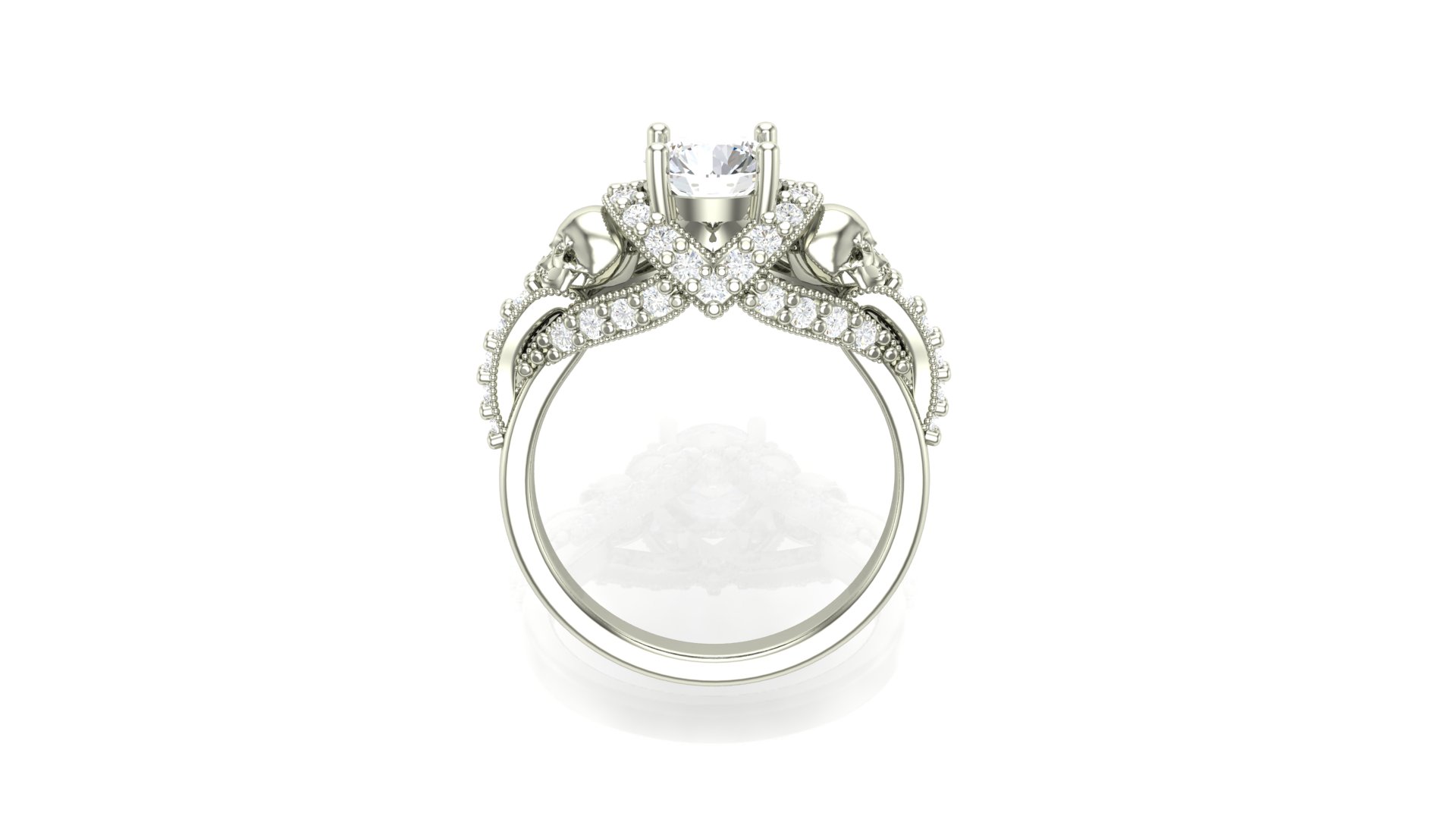
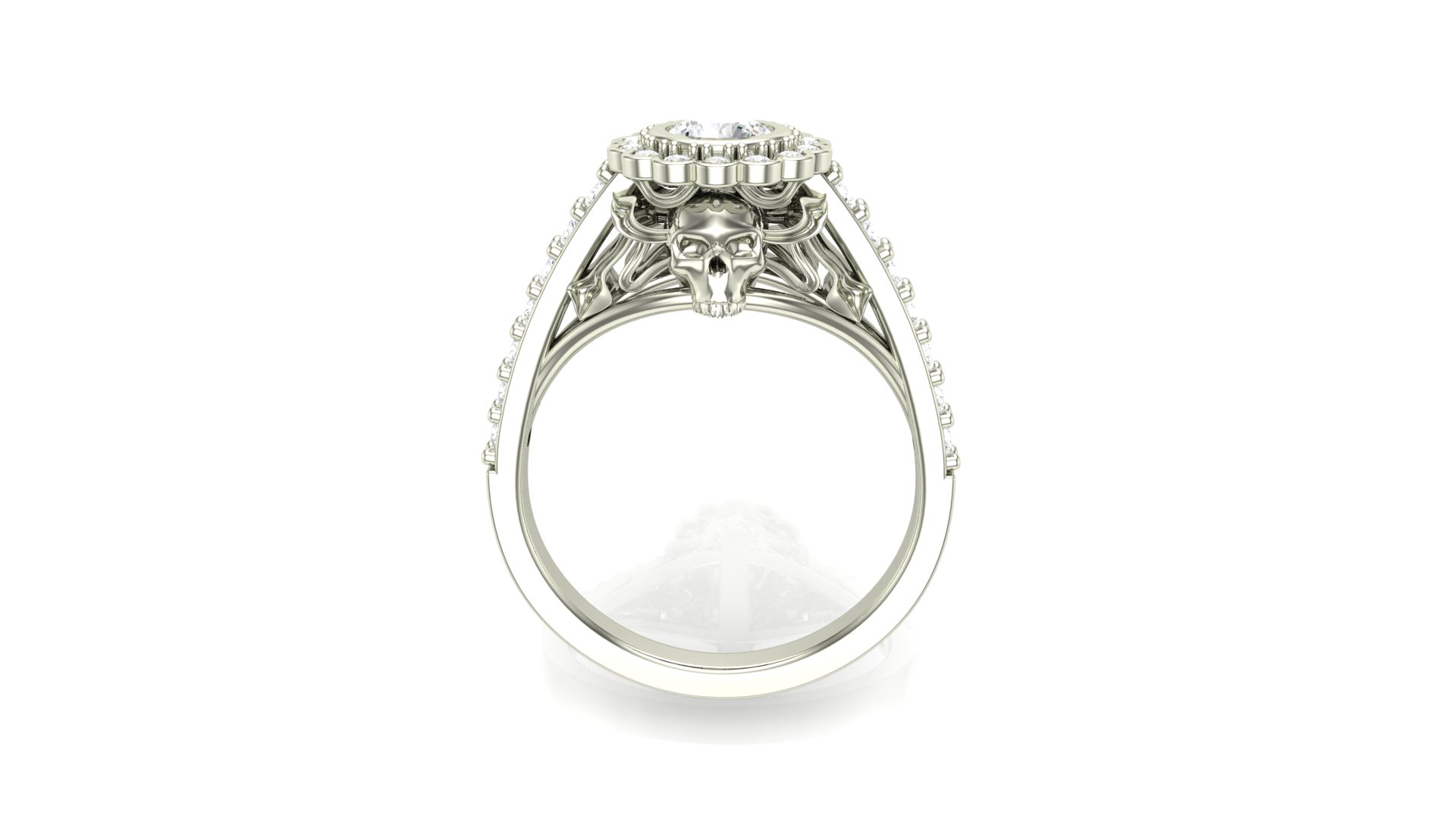
A halo can surround the center stone with diamonds, moissanite, colored gemstones, or a combination of stones. The skulls may sit beneath the halo, appear along the shoulders, or become part of the gallery supporting the center setting.
A halo increases the overall visual coverage of the ring and creates additional room for detail. It can be round, oval, cushion-shaped, geometric, pointed, or designed to follow the outline of an unusual center stone.
For a less conventional appearance, the halo may be interrupted by skulls, bones, scrollwork, or contrasting sections of metal. A hidden halo can also be placed beneath the center stone to add sparkle from the side without changing the face-up outline.
Your existing portfolio includes skull-halo designs that combine outward-facing skulls, pavé ribbons, milgrain, smoke-like details, and customizable center stones.
Solitaire and Side-Skull Designs
A skull ring does not need a halo or a heavily decorated band. A solitaire can place the visual emphasis on the center stone while using skulls as structural or decorative side elements.
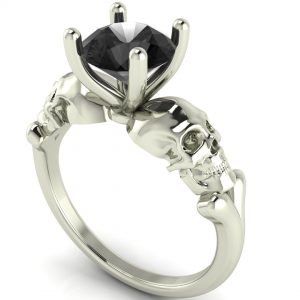
The skulls can face outward, toward the center stone, or in opposite directions. They may support the basket, connect the center setting to the band, or sit beneath the stone where they are visible primarily from the side.
This type of design works well when you want the ring to read as an engagement ring first and reveal the skull theme upon closer inspection.