Custom Three-Stone Engagement Rings
A three-stone engagement ring places one center stone between two side stones, creating a balanced design with greater finger coverage than a traditional solitaire. The stones may match in shape and color or be combined to create contrast through different cuts, sizes, and gemstones.
Browse our completed three-stone engagement rings below for inspiration. We can modify any design shown here, combine features from several rings, or create something completely new around your preferred stones, metal, ring size, style, and budget.
Every part of the ring can be customized, including the proportions of the three stones, setting style, band width, profile, accent diamonds, engraving, and wedding-band fit. Before production begins, you will receive detailed CAD renderings so you can review the design from multiple angles.
Showing all 30 results
-
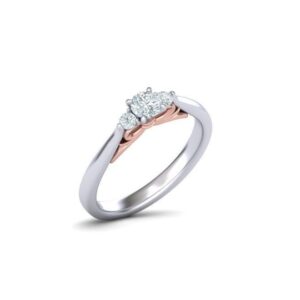
2 Tone 3 Stone Engagement Ring
-
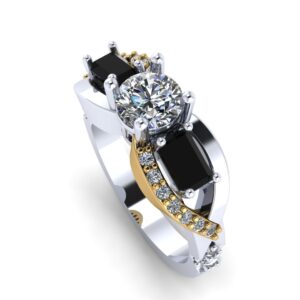
2 Tone 3 Stone Engagement Ring Online
-
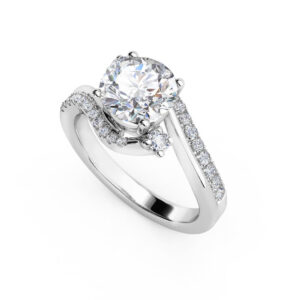
3 Stone Bypass Engagement Ring
-
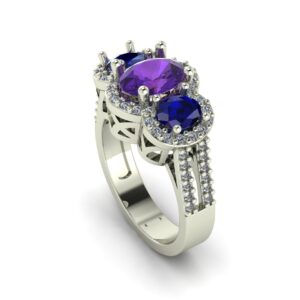
3 Stone Halo Engagement Ring
-
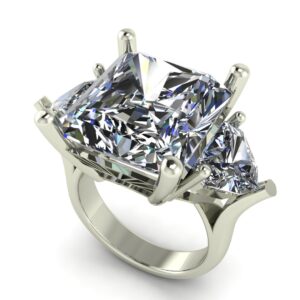
3 Stone Princess Cut Engagement Ring
-
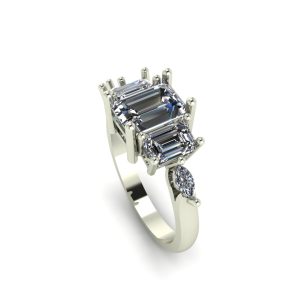
5 Stone Engagement Ring
-
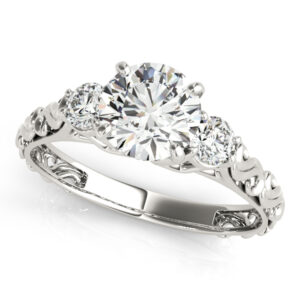
Art Deco 3 Stone Engagement Ring
-
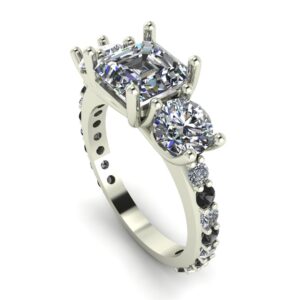
Asscher 3 Stone Engagement Ring
-
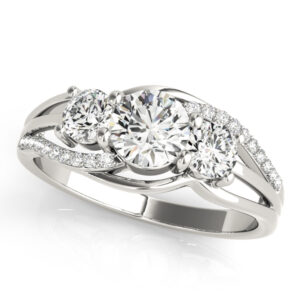
Asymmetrical Three Stone Engagement Ring
-
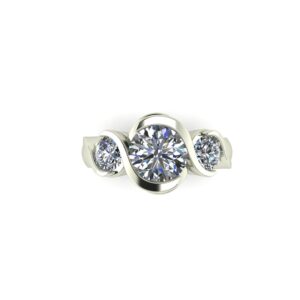
Bezel Set 3 Stone Engagement Ring
-
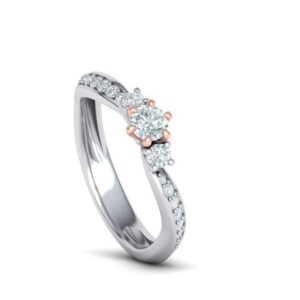
Bypass 3 Stone Engagement Ring
-
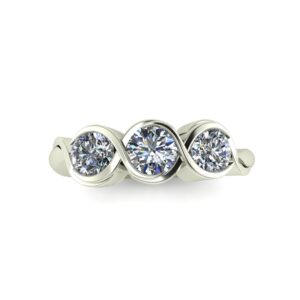
Criss Cross 3 Stone Engagement Ring
-
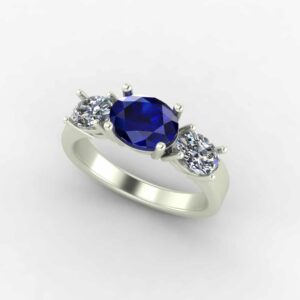
East West Oval 3 Stone Ring
-
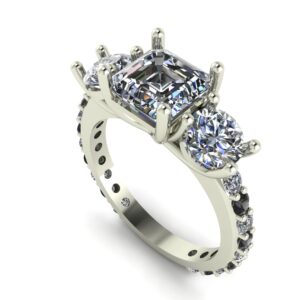
Emerald 3 Stone Engagement Ring
-
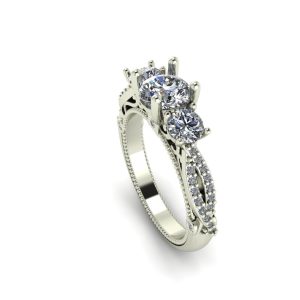
Filigree Three Stone Engagement Ring
-
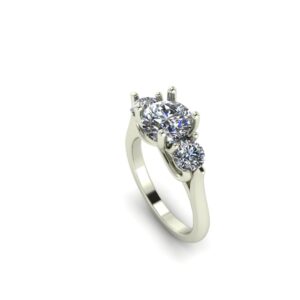
Infinity Three Stone Engagement Ring
-
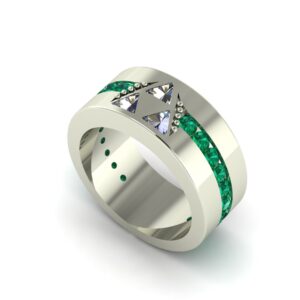
Legend Of Zelda Wedding Ring
-
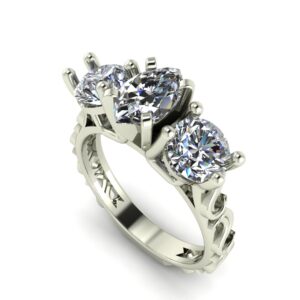
Marquise 3 Stone Engagement Ring
-
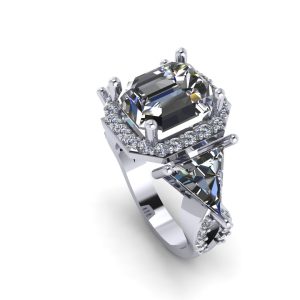
Mixed Cut Three Stone Engagement Ring
-
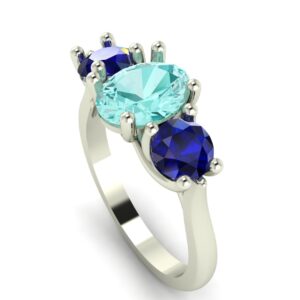
Oval 3 Stone Engagement Ring
-
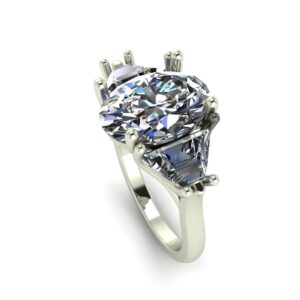
Oval Mixed Cut 3 Stone Engagement Ring
-
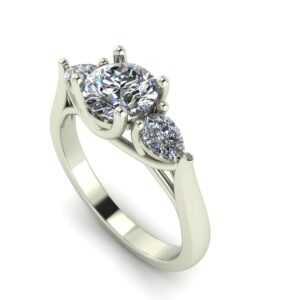
Pear 3 Stone Engagement Ring
-
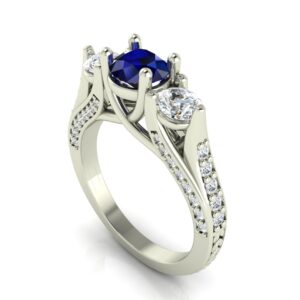
Sapphire 3 Stone Engagement Ring
-
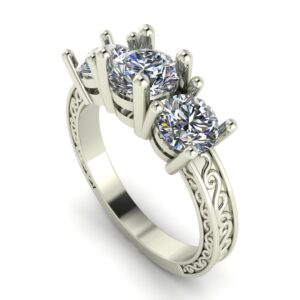
Scrolled 3 Stone Engagement Ring
-
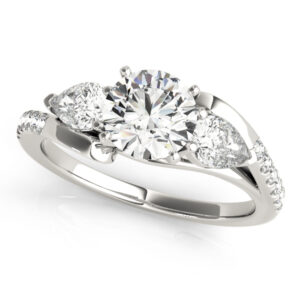
Split Shank 3 Stone Engagement Ring
-
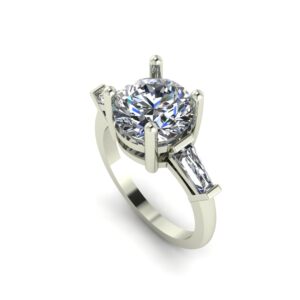
Tapered Baguette Three Engagement Ring
-
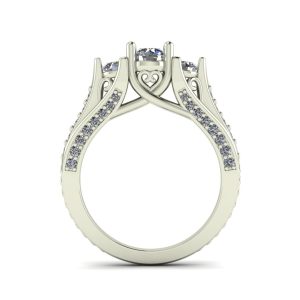
Three Stone Heart Engagement Ring
-
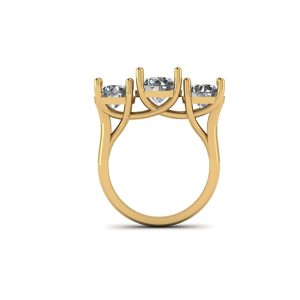
Three Stone Trellis Engagement Ring
-
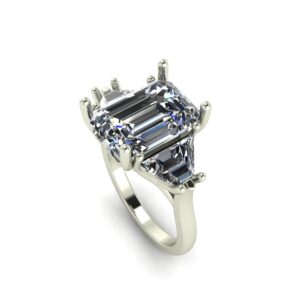
Trapezoid 3 Stone Engagement Ring
-
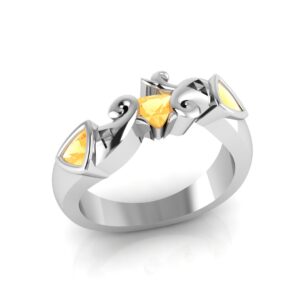
Triforce 3 Stone Engagement Ring
What Is a Three-Stone Engagement Ring?
A three-stone engagement ring typically has one principal center stone with a smaller stone positioned on each side. The three stones may be set closely together to create one continuous arrangement or separated slightly so each stone has a more defined outline.
The center stone is often larger, but it does not have to be. Three similarly sized stones can produce a broader, more uniform appearance, while smaller side stones place greater emphasis on the center.
The arrangement can be traditional and symmetrical or adapted into a bypass, split-shank, asymmetrical, halo, bezel-set, or vintage-inspired design.
What Do the Three Stones Represent?
The three stones are commonly associated with the past, present, and future of a relationship. Other interpretations include friendship, love, and fidelity; two partners and their family; or another meaning chosen by the wearer.
The symbolism is optional. You may simply prefer the balance, sparkle, color, and finger coverage created by three stones. The gemstones can also represent children, family members, birth months, anniversaries, or other personal connections.
A three-stone ring should not be confused with a toi et moi ring, which traditionally uses two principal stones rather than three.
Choosing the Center Stone
The center stone establishes the primary shape and scale of the ring. Round, oval, cushion, emerald, radiant, princess, Asscher, pear, marquise, and heart shapes can all work in a three-stone arrangement.
Round brilliant diamonds provide a traditional appearance and pair easily with many side-stone shapes. Oval, pear, and marquise stones create an elongated look. Emerald and Asscher cuts produce broader flashes of light and work especially well in geometric or Art Deco-inspired settings.
The center does not have to be a diamond. Moissanite, sapphire, ruby, emerald, and other appropriate gemstones can be used when their durability and condition suit the design.
Choosing the Side Stones
Side stones should support the center rather than compete with it unless three equally prominent stones are the intended design.
Their dimensions, angles, and placement affect how smoothly the arrangement transitions into the band. Smaller side stones direct attention toward the center, while larger stones create more coverage across the finger.
The side stones can match the center or use contrasting shapes. Popular combinations include an oval center with pear-shaped sides, an emerald-cut center with trapezoids, a round center with tapered baguettes, or a cushion center with half-moon stones. GIA notes that round, oval, princess, cushion, emerald, trilliant, and other shapes can be combined successfully when their proportions complement one another.
Matching dimensions are often more important than matching carat weights. Two side stones can weigh the same but appear different if their length, width, depth, or proportions do not match.
Matching and Mixed-Cut Designs
A matching three-stone ring uses the same shape for all three stones. Three rounds create a traditional arrangement, while three ovals, cushions, emerald cuts, or princess cuts produce a more distinctive version of the same balanced layout.
Mixed-cut designs combine different shapes to emphasize the center stone or create a particular outline. Pears and tapered baguettes naturally direct the eye inward. Trapezoids and step-cut sides create a structured, architectural appearance. Half moons soften the transition between a rounded center and the band.
The stones do not need to be identical in faceting, but they should appear intentional together. Their relative sizes, color, brightness, and spacing should be considered as a complete composition.
Diamond Three-Stone Engagement Rings
An all-diamond arrangement can use natural diamonds, lab-grown diamonds, or a combination agreed upon before production. The center and side diamonds may have the same general quality or be selected within ranges that look harmonious once set.
Side diamonds do not necessarily need the exact same clarity grade as the center. Small clarity differences may be difficult to see without magnification. Color matching is often more noticeable, particularly when the stones sit directly beside one another. GIA recommends choosing side diamonds with similar or closely related color grades when a consistent appearance is desired.
Cut, transparency, proportions, and visible dimensions also matter. Similar grades on paper do not guarantee that three diamonds will display the same brightness or face-up appearance.
Colored-Gemstone Three-Stone Rings
Colored gemstones can be used in the center, on the sides, or throughout the entire arrangement. A diamond center may be paired with sapphires or rubies, while a colored center stone can be framed by colorless diamonds.
Birthstones can give each stone a personal meaning. A ring might represent two partners and a child, three children, or significant months and anniversaries.
Sapphire and ruby are frequently selected for engagement rings because they offer strong durability for many daily-wear designs. Other gemstones may also be used, but their resistance to scratching, chipping, heat, and chemicals should be considered along with the setting.
The colors may match, form a gradient, or provide deliberate contrast. The metal color can also affect how warm, cool, light, or dark the gemstones appear.
Prong-Set Three-Stone Rings
Prongs hold each stone at several individual points, leaving much of the gemstone visible. This creates an open appearance and allows the outlines of the three stones to remain distinct.
The ring may use separate baskets for each stone or connect them through a shared gallery. Four- and six-prong arrangements are common, but the appropriate number and placement depend on the stone shapes, dimensions, and overall design.
Pointed shapes such as pears, marquises, and princess cuts require protection around vulnerable tips and corners. The prongs must be substantial enough to secure the stones without overwhelming them visually.
Bezel-Set Three-Stone Rings
A bezel surrounds all or part of a gemstone’s edge with metal. Three separate bezels create clearly defined outlines and can unify stones of different shapes or colors.
A full bezel provides greater edge coverage and a smoother profile. Partial bezels leave selected areas open and may be incorporated into bypass, flowing, or contemporary designs.
Prongs generally expose more of a stone, while bezels provide more coverage around its edge. The best choice depends on the desired appearance, stone shape, and wearer’s routine.
Trellis and Cathedral Settings
A trellis setting uses crossing prongs or supports that weave beneath and between the stones. The curved structure creates an attractive side profile and can visually connect the three settings.
Cathedral shoulders rise from the band toward the stones, creating arches on either side of the arrangement. The higher profile may provide room for engraving, hidden stones, filigree, or an open gallery.
Trellis and cathedral details can be simple and modern or decorated with milgrain, scrollwork, engraving, and accent diamonds. Their height should be balanced with comfort and wedding-band clearance.
Halo and Hidden-Halo Designs
A halo may surround the center stone while the two side stones remain separate, or all three stones may receive individual halos. Another option is one continuous border surrounding the entire arrangement.
A hidden halo places small stones beneath the center or side settings. It adds sparkle from the side without substantially changing the face-up outline.
Halos increase the overall visual coverage of the ring, but their proportions must be controlled carefully. An oversized halo can make the arrangement crowded or reduce the distinction between the center and side stones.
Bypass and Asymmetrical Rings
A bypass ring uses sides that curve past or around the stones instead of meeting in a conventional symmetrical arrangement. The three stones may follow that movement across the finger or be positioned at different heights and angles.
An asymmetrical design can combine unequal stone sizes, different shapes, or an offset center. Although the arrangement is intentionally uneven, the visual weight still needs to feel balanced.
These designs work particularly well when the stones have different personal meanings or when the customer wants a three-stone ring that does not resemble the traditional horizontal layout.
Vintage and Art Deco Three-Stone Rings
Vintage-inspired designs can incorporate engraving, milgrain, filigree, scrollwork, floral details, and decorative galleries. The stones may use antique-style shapes or modern stones within an older design language.
Art Deco versions often use emerald cuts, Asscher cuts, baguettes, trapezoids, geometric borders, and strong symmetry. Contrasting sapphires, rubies, or other colored stones can emphasize the architecture of the design. Symmetrical side stones and geometric diamond shapes were common elements in Art Deco jewelry.
A ring does not need to reproduce one historical period exactly. Custom design allows geometric, floral, engraved, and modern elements to be combined into one coordinated piece.
Choosing the Metal
Three-stone engagement rings can be made in yellow gold, white gold, rose gold, platinum, or combinations of metals.
White gold and platinum create a bright neutral background around colorless diamonds. Yellow gold provides warmth and stronger contrast. Rose gold adds softer color and can complement vintage, floral, or romantic designs.
Two-tone construction can use white metal around the stones with yellow or rose gold along the band. The separate metal colors can also emphasize bezels, borders, side details, or individual gemstones.
The metal choice affects more than appearance. Weight, price, maintenance, construction, future sizing, and the amount of detail in the design should also be considered.
Planning for the Wedding Band
The width and structure of a three-stone setting can prevent a straight wedding band from sitting flush. Low baskets, wide side stones, projecting prongs, and decorative galleries may require a curved or fitted band.
The wedding band should therefore be considered before the engagement-ring design is approved. Tell us whether you prefer a flush fit, a deliberate gap, or a band shaped around the three stones.
When both rings are designed together, the wedding band can be created using the engagement ring’s exact CAD dimensions. This allows the contours, stones, widths, and decorative elements to work together.
How the Custom Design Process Works
The process begins with your ideas, inspiration photographs, preferred stones, metal, ring size, wedding-band preferences, and budget. You may select one of the rings shown above, combine details from several designs, or describe a completely new arrangement.
After the specifications and price are agreed upon, a deposit is required to begin the CAD design. We create detailed renderings showing the stone proportions, settings, band, profile, and other features from multiple angles.
You can request reasonable changes before approving the design for production. Once approved, the ring is manufactured in your selected metal, polished and finished, set with the center and side stones, inspected, and photographed before shipping.
What Determines the Price?
The price depends on the center stone, side stones, metal, ring size, total weight, setting style, band dimensions, and complexity of the design.
A straightforward three-stone ring with simple prong settings generally requires less labor than a ring with custom-cut side stones, halos, extensive pavé, engraving, filigree, two-tone construction, or a fitted wedding band.
Matching side stones can also affect the price and availability. Finding two stones with compatible shapes, dimensions, color, and appearance may require more sourcing than selecting one center stone.
If you have a target budget, we can adjust the stone sizes, materials, setting style, and amount of decorative detail while preserving the primary design.
Frequently Asked Questions
Do all three stones have to be diamonds?
No. The ring can contain diamonds, moissanite, colored gemstones, or a combination of suitable stones.
Do the three stones have to be the same shape?
No. Matching shapes produce a traditional balanced arrangement, while mixed shapes can emphasize the center stone and create a more distinctive outline.
Do the side diamonds need the same grades as the center?
They do not need identical grades, but their visible color, brightness, size, and overall appearance should work together. Closely related color grades are often preferable when a uniform look is desired.
Can the three stones be the same size?
Yes. Three equal or nearly equal stones create a broader arrangement in which all three receive similar visual emphasis. A larger center with smaller sides creates a more traditional hierarchy.
Can you use gemstones I already own?
Often, yes. We need the exact dimensions and condition of each stone before confirming the design and setting requirements.
Can you modify one of the rings shown here?
Yes. The stones, shapes, sizes, metal, settings, band, engraving, profile, and other details can be changed.
Can a three-stone ring include a halo?
Yes. The center stone may have a halo, all three stones may be surrounded, or one border may frame the entire arrangement.
Can it fit beside a straight wedding band?
Sometimes. The answer depends on the height, width, baskets, prongs, and side-stone placement. Other designs require a curved or custom-fitted band.
Will I see the design before it is made?
Yes. You will receive CAD renderings showing the proposed ring from multiple angles and can request reasonable revisions before approving it for production.
Start Designing Your Three-Stone Engagement Ring
Choose a ring from this collection, combine details from several examples, or send us your own idea. Tell us the stone shapes and approximate sizes you prefer, whether you want diamonds or colored gemstones, your metal choice, ring size, budget, and wedding-band preferences.
We will help you refine your idea if we need to, then create a custom three-stone engagement ring around the design you approve.