Custom Diamond Jewelry for Women
Custom diamond jewelry can be designed around a particular stone, an existing piece of jewelry, a personal symbol, or simply an idea you have not found anywhere else. Instead of choosing from a fixed selection, you can control the type of jewelry, diamond arrangement, metal, proportions, finish, engraving, and overall level of detail.
We create diamond rings, pendants, earrings, bracelets, pins, brooches, and other pieces for women. The design may be understated enough for frequent wear or built around larger stones, stronger shapes, and more elaborate metalwork.
This page provides an overview of the possibilities. Each jewelry type also has its own portfolio where you can view completed designs in greater detail.
Diamond Pendants and Necklaces
A pendant provides considerable freedom because the design does not have to wrap around a finger or fit beside another ring. It can be compact and simple or large enough to include lettering, several gemstones, sculptural details, and complex stone arrangements.
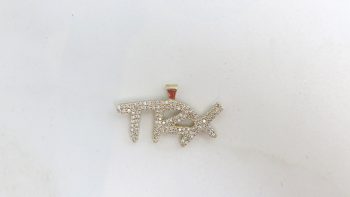
Diamond pendant designs may be based on initials, names, logos, flowers, religious symbols, animals, maps, family themes, or original artwork. A single diamond can remain the focal point, while smaller stones may be used to form a halo, border, pattern, or contrasting detail.
The chain and bail should be considered as part of the piece. The pendant’s dimensions and weight affect the appropriate chain thickness, while the bail must be large enough for the selected chain and positioned so the pendant hangs correctly.
An existing diamond can often be moved from an old ring or necklace into a completely different pendant. Smaller diamonds from several pieces may also be arranged together into a cluster, journey design, family pendant, or another composition.
Diamond Earrings
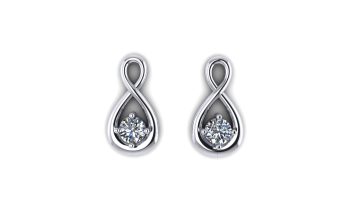
Earrings must be designed as a pair, but that does not require them to be perfectly identical. The design may be symmetrical, mirrored, intentionally mismatched, or connected through a shared theme.
Diamond studs remain a practical choice for frequent wear, but they can be customized through the prong style, bezel, halo, basket, metal, and back type. Hoops, drops, dangles, climbers, and sculptural earrings provide more room for movement and multiple stones.
Weight and balance deserve special attention. An enlarged drawing may look attractive while producing an earring that pulls forward or feels too heavy. The placement of the post, hinge, clasp, and gemstones should keep the finished pair stable on the ear.
Diamonds may also be combined with sapphires, rubies, pearls, birthstones, or other suitable gemstones. Your earring category currently includes studs, hoops, dangles, floral designs, halos, geometric pieces, and mixed diamond-and-gemstone styles.
Custom Diamond Bracelets
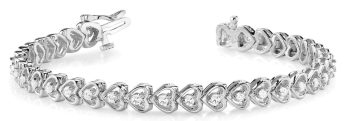
A bracelet can use diamonds continuously around the wrist or reserve them for one central section. Tennis bracelets provide a familiar arrangement, while bangles, cuffs, chains, links, and hinged designs create very different appearances.
The bracelet’s construction is just as important as its stone coverage. The clasp, hinges, joints, links, and safety mechanisms must work together while allowing enough movement for comfort.
Diamonds can be placed in channels, bezels, prongs, pavé sections, flush settings, or individual decorative elements. The design may incorporate initials, dates, symbols, geometric patterns, or colored gemstones without covering the entire bracelet in stones.
Wrist size and desired fit should be established before production. A close-fitting bracelet behaves differently from one intended to move freely, and the correct length depends on both the wrist and the structure of the design.
Diamond Fashion and Statement Rings
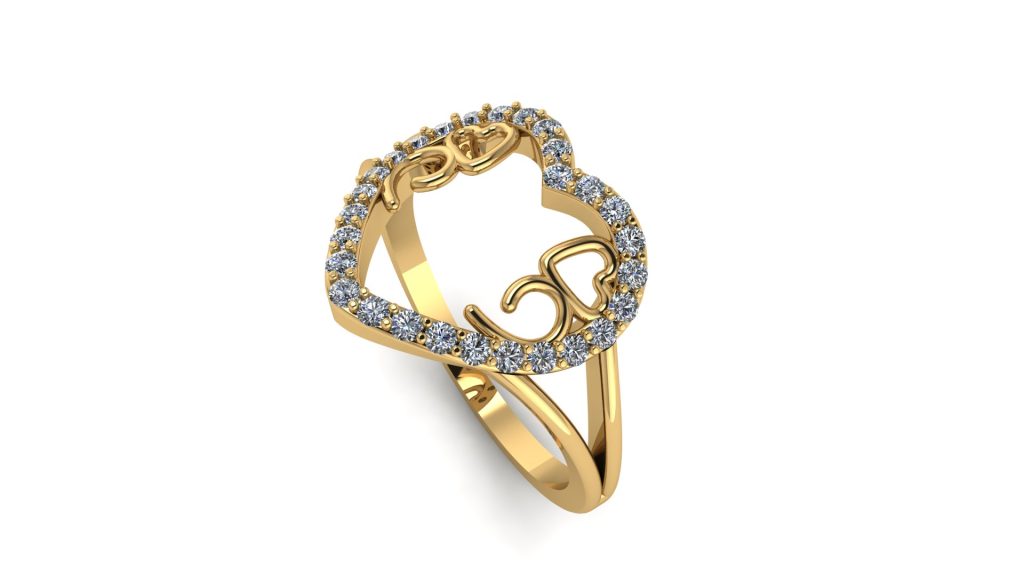
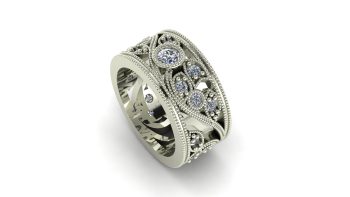
Not every diamond ring is an engagement ring or wedding band. A custom fashion ring can use asymmetry, colored diamonds, several gemstones, broad metal surfaces, unusual stone orientations, or a design that would not suit a traditional bridal ring.
Statement rings may feature clusters, sculptural forms, flowers, animals, geometric arrangements, cocktail-ring proportions, or stones spread across several levels. A simpler right-hand ring might use one diamond, an engraved band, or a low bezel setting.
Because larger fashion rings cover more of the finger, their width, thickness, underside, and balance affect comfort. The ring should not rotate excessively or press against adjacent fingers simply because the design looks impressive from above.
Your fashion and statement ring category contains non-bridal designs in numerous styles, making it the more appropriate destination for visitors who want to browse completed rings rather than engagement jewelry.
Diamond Pins and Brooches
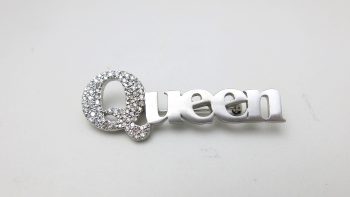
Pins and brooches offer a broad surface for artwork and are especially well suited to flowers, animals, crests, logos, initials, ribbons, and symbolic designs.
A pin can use one prominent diamond or distribute smaller stones across the design. Diamonds may outline a shape, draw attention to a particular feature, or be combined with enamel and colored gemstones.
The pin mechanism must suit the size and weight of the piece. Its position affects how the brooch sits on clothing and whether it remains level. A large piece may need more than one point of support to prevent rotation.
Some brooches can also be designed with a hidden bail so they may be worn as pendants. This should be planned from the beginning because the bail, pin stem, balance, and chain position all affect the construction.
Diamond Engagement Rings
Engagement rings are only one part of women’s diamond jewelry, but they require their own design considerations. The center diamond, setting height, side stones, band, and wedding-ring fit must all be planned together.
Someone looking specifically for bridal jewelry should visit our custom diamond engagement rings page, where the discussion can remain focused on diamond shapes, solitaires, halos, three-stone arrangements, pavé, cathedral settings, and wedding-band clearance.
Keeping detailed engagement-ring guidance on that dedicated page prevents this broader jewelry page from trying to serve two different purposes.
Natural and Lab-Grown Diamonds
Natural and laboratory-grown diamonds are both diamonds. They possess essentially the same chemical, physical, and optical properties, but they have different origins and growth histories. Natural diamonds formed through geological processes, while lab-grown diamonds are produced by HPHT or CVD methods. Specialized testing is used to reliably distinguish them.
Natural diamonds may appeal to someone who values geological origin and natural rarity. Laboratory-grown diamonds often allow greater visible size or different quality characteristics within the same initial budget.
The appropriate choice depends on the customer and the project. A large pendant, pair of earrings, or diamond bracelet may involve different budget considerations from a ring centered on one important stone.
Both types should be represented accurately, and the documentation accompanying a significant diamond should be reviewed before purchase.
Choosing Diamonds for the Design
The familiar 4Cs are cut, color, clarity, and carat weight. Cut concerns a diamond’s proportions and interaction with light. Color evaluates the relative absence of color, clarity considers inclusions and blemishes, and carat measures weight.
Those grades should be considered in relation to the actual jewelry. Small diamonds placed in a bracelet do not necessarily require the same specifications as an emerald-cut center diamond in a ring. Stones positioned directly beside one another may need closer color matching than diamonds scattered through a multicolored design.
Clarity characteristics that are difficult to see in a small brilliant-cut accent may be more noticeable in a larger step-cut diamond. Differences between neighboring color grades can also be subtle, especially after the stones are set in metal.
Carat weight is not the same as visible size. Two diamonds with equal weight can have different measurements and face-up appearances because their shapes and proportions distribute that weight differently.
Rather than automatically selecting the highest grade available, we consider how the diamonds will appear together and which characteristics will matter in the finished piece.
White and Fancy-Color Diamonds
Diamonds are not limited to the traditional colorless or near-colorless range. Yellow, brown, blue, pink, green, gray, black, and other colors may be used as the main feature or as accents.
Fancy-color diamonds are evaluated differently from diamonds on the traditional D-to-Z scale. In a fancy-color stone, the presence and strength of color are desirable rather than something being minimized.
Colored diamonds can create strong contrast against colorless stones or a particular metal. Black diamonds may define outlines and patterns, while yellow or champagne diamonds can work especially well with yellow and rose gold.
When natural fancy-color diamonds are not practical for the budget, laboratory-grown colored diamonds or other gemstones can be considered.
Choosing the Metal
Yellow gold creates a warm setting and provides visible contrast around white diamonds. White gold and platinum produce a neutral background that can blend more closely with colorless stones. Rose gold adds softer color and works well with floral, vintage-inspired, and two-tone designs.
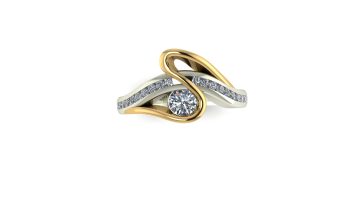
The entire piece does not have to use one metal color. A white-metal diamond setting can be combined with a yellow- or rose-gold body, or contrasting metal may be reserved for borders, lettering, flowers, and other details.
Metal selection also affects weight, cost, maintenance, manufacturing, and future repairs. The proportions should be designed for the chosen alloy rather than assuming the same dimensions are appropriate for every metal.
Reusing Diamonds From Older Jewelry
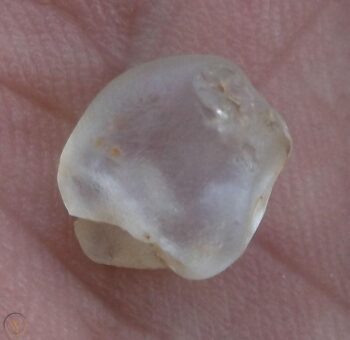
Diamonds removed from inherited, damaged, or outdated jewelry can often be incorporated into a new design. One center stone may become a pendant, while several smaller diamonds from rings or earrings can be gathered into a bracelet, cluster ring, or family piece.
Diamonds are highly resistant to scratching, but they are not impossible to chip or break. Durability includes toughness and stability as well as hardness, and a sufficiently hard blow can damage a diamond along a cleavage direction.
The exact old metal cannot always be melted directly into the new piece. Previous solder, mixed alloys, repairs, contamination, and the quantity available can make refining or applying its value toward new metal the better approach.
You can view our portfolio of custom engagement rings to look for idea. Or you can contact us with your own idea.
Designing a Piece From the Beginning
A custom project usually starts with a purpose rather than a finished drawing. You may know that you want a pendant using inherited diamonds, earrings based on a flower, or a bracelet that includes several family birthstones.
From there, the practical details are established: dimensions, stones, metal, how the jewelry will be worn, and the amount available for the project. Photographs and sketches help communicate the direction even when none of them shows exactly what you want.
The design is then developed as a three-dimensional CAD model. Renderings allow the structure and proportions to be reviewed before the jewelry moves into production. This is where the stone arrangement, thickness, profile, connections, and decorative details can be adjusted.
After approval, the piece is manufactured, refined, set, finished, and inspected. Different projects may involve casting, fabrication, laser welding, engraving, enamel, several surface finishes, or a combination of methods.
What Determines the Price?
The total depends on more than the number or weight of the diamonds. Metal type, finished dimensions, total weight, number of settings, complexity of the construction, engraving, enamel, moving parts, and finishing all contribute to the cost.
A pendant using one existing diamond may be relatively straightforward. A bracelet containing many individually matched stones and a complex clasp requires more sourcing, setting, and assembly. A pair of earrings involves creating two pieces that must balance and relate to one another.
When a budget has been established, the design can often be adjusted through the dimensions, stone sizes, metal, number of accents, or amount of detailed labor. Those choices should be discussed before the piece is modeled rather than after the design is complete.
Caring for Diamond Jewelry
Diamonds can collect oil, lotion, soap, and debris that reduce their visible brightness. Cleaning the back and underside of the stones is often as important as cleaning the top.
Mild household detergent, warm water, and a soft brush are generally appropriate for many pieces, but the care method must account for every material in the jewelry—not only the diamonds. Pearls, enamel, delicate gemstones, plating, and antique components may require different treatment.
GIA cautions that ultrasonic and steam cleaners can loosen stones, so jewelry should be inspected before professional cleaning methods are used.
Prongs, clasps, hinges, links, and other working components should also be checked periodically. A diamond may remain undamaged while the metal holding it becomes worn.
Can You Use Diamonds I Already Own?
In many cases, yes. Clear photographs and any available documentation are helpful during the initial discussion, but the diamonds normally need to be measured and evaluated before the final design and price can be confirmed.
Do All the Diamonds Need Grading Reports?
No. Reports are most useful for significant individual diamonds. Small accent stones are commonly selected and matched without each one receiving a separate laboratory report.
Can Natural and Lab-Grown Diamonds Be Used Together?
They can, provided the combination is disclosed and agreed upon. Some customers choose one type throughout the piece, while others use a particular center diamond with differently sourced accents.
Will I See the Design Before Production?
Yes. CAD renderings show the proposed jewelry from several angles. They allow the major proportions and details to be reviewed before the piece is manufactured.