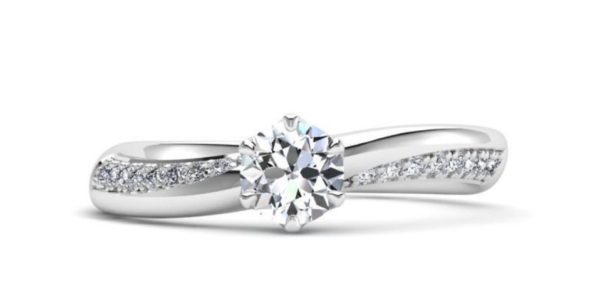
Custom Diamond Engagement Rings
Creating custom diamond engagement rings gives you control over the diamond, setting, metal, proportions, and details instead of limiting you to a standard mounting. We can modify one of the rings shown below, combine elements from several designs, or create something entirely new from your photographs, sketches, or ideas.
Choose a natural or lab-grown diamond in your preferred shape and size, then customize the setting, band width, profile, accent stones, engraving, and wedding-band fit. Before the ring is made, you will receive detailed CAD renderings showing the design from multiple angles.
Browse our completed diamond engagement rings for inspiration. Each design can be adjusted around your diamond, preferences, and budget.
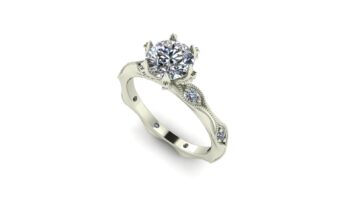
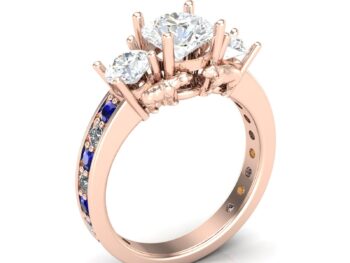
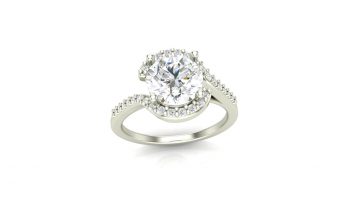
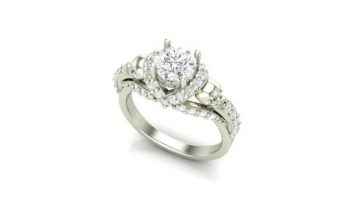
The center stone is secured by 6 prongs that are accented with 1mm stones. If you don’t like 6 prongs, or don’t want the accents on the prongs, we can change that. If you wanted more stones, we could probably add 2-4 more. We could also remove stones.
Custom Engagement Rings
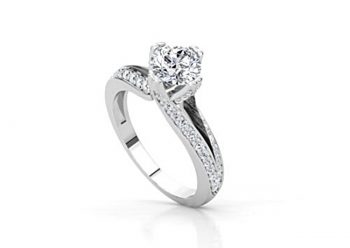
This Art Deco Engagement Ring really highlights the center stone and will definitely turn heads with its elegant design elements and minimalist setting.
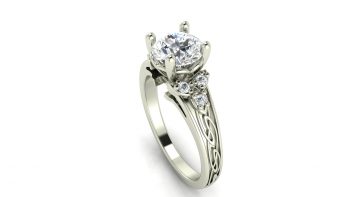
This Celtic engagement ring has triquetras adorning the band up to the shoulders, where 3, 1.5mm stones sit in Celtic symbols. The basket holding the head also has some symbols in it.
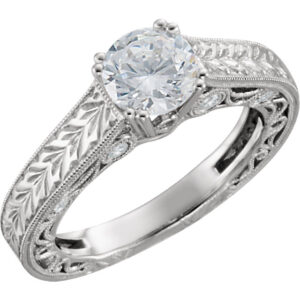
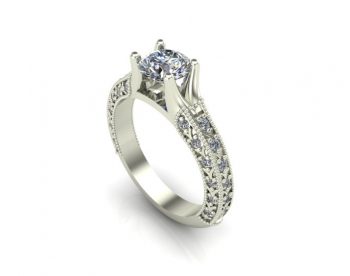
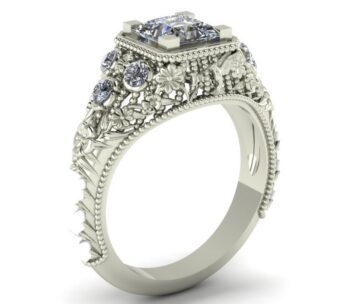
This Engraved Vintage Engagement Ring has both diamond accents as well as engraving on it. The center stone is a 6.5mm round, but it would also work well with a cushion or princess cut stone.
Custom Diamond Engagement Rings
The belief that diamonds are forever makes them the ideal stone to represent the eternal love between a couple. We want our Custom Diamond Engagement Rings to symbolize this eternal union and so we put the same effort into our Custom Diamond Engagement Rings as if we were making them for ourselves. Please browse this list and contact us with your idea for a custom engagement ring. We can work with almost any budget to give you a unique, custom ring that nobody else has.
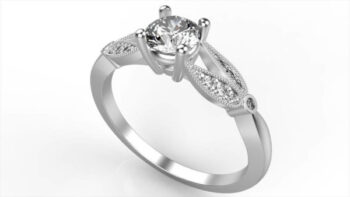
Custom Diamond Engagement Rings – Floral Engagement Ring
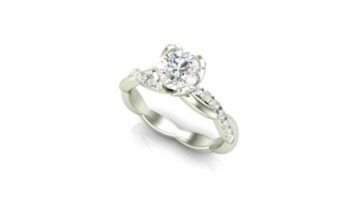
The center stone is shown a round 6mm, but other sizes and shapes can be used. It is also possible to make the accents larger or change the flower to one you like.
Custom Diamond Engagement Rings – Nature Inspired Engagement Rings
Custom Diamond Engagement Rings – 2 Stone Engagement Ring
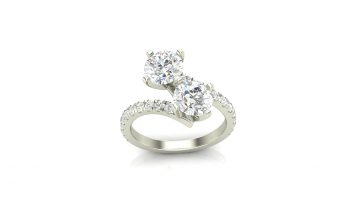
This one is set with 2, 6mm diamonds and accented with 1.8mm stones in the band. We can also make this ring without the stones in the band.
Custom Diamond Engagement Rings – Woven Band Rings
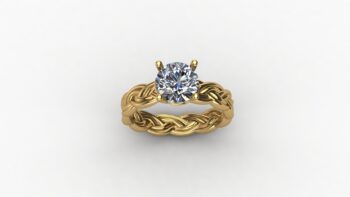
It is shown with a round stone, but any shape could be used. The band could also be made thinner and a third strand could be added as well.
Custom Diamond Engagement Rings – Vintage Engagement Rings
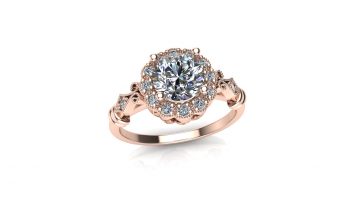
Custom Diamond Engagement Rings – Hummingbird Ring
Custom Diamond Engagement Rings
We fully guarantee our work and don’t manufacture the ring until you give the approval. This ensures you will get the ring you want. Creating custom diamond engagement rings is all about the details.
Designing a Ring Around Your Diamond
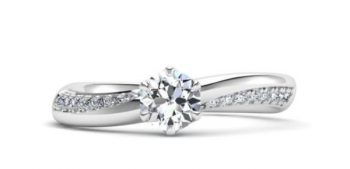
The center diamond and setting should be designed together. Its shape, exact dimensions, depth, girdle, and proportions affect the prongs, basket, setting height, and overall balance of the ring.
You may begin with a diamond you already own or select one as part of the custom project. When designing around an existing stone, we need its precise measurements rather than its carat weight alone. Two diamonds with the same weight can have noticeably different face-up dimensions and require different settings.
The ring can be created around a traditional round brilliant diamond or a fancy shape such as an oval, cushion, emerald, radiant, pear, marquise, princess, Asscher, or heart. Each shape creates a different appearance and presents different setting considerations.
Natural and Lab-Grown Diamonds
Natural diamonds form within the earth, while lab-grown diamonds are produced under controlled conditions. Both are diamonds and possess essentially the same chemical, physical, and optical properties, although their origins and growth structures are different. Specialized testing can distinguish one from the other.
Natural diamonds are often selected by customers who value geological origin, rarity, and tradition. Lab-grown diamonds generally allow customers to purchase more size or higher apparent quality for the same initial budget.
Neither origin determines whether a diamond will be attractive. Cut, proportions, color, clarity, and the appearance of the individual stone remain important in both cases.
Choosing Cut, Color, Clarity, and Carat Weight
The 4Cs—cut, color, clarity, and carat weight—provide a standardized way to describe diamond quality. Cut concerns the diamond’s proportions and interaction with light. Color grades the relative absence of color. Clarity evaluates inclusions and blemishes. Carat measures the diamond’s weight.
Cut should usually receive a high priority, particularly when choosing a round brilliant diamond. A well-cut stone can appear brighter and more lively than a larger diamond with weaker proportions. Round brilliant diamonds are currently the only shape receiving an overall GIA cut grade; fancy shapes must also be judged through their measurements, facet pattern, photographs, video, and actual appearance.
Color and clarity can often be balanced to avoid paying for differences that are difficult to see without controlled lighting or magnification. Many distinctions between neighboring color grades are subtle, and an eye-clean diamond may provide a better balance than paying primarily for microscopic clarity rarity.
Carat measures weight rather than visible diameter. Shape and proportions affect how large a diamond appears when viewed from above, so actual millimeter measurements should be compared along with carat weight.
Solitaire Diamond Engagement Rings
A solitaire places one principal diamond at the center of the design. The ring may appear simple from above while including distinctive details beneath the stone or along the band.
The center diamond can be held with four or six prongs, surrounded by a bezel, raised within a cathedral profile, or placed in a lower basket setting. The band may be tapered, knife-edged, twisted, split, engraved, or sculpted around the center stone.
A solitaire does not have to be plain. Hidden diamonds, filigree, milgrain, contrasting metals, unusual prongs, or an elaborate gallery can add character without distracting from the center diamond.
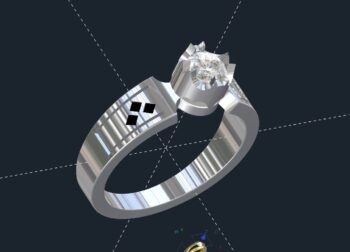
The ring can also be made with the Harley Quinn symbols, the Bat, a Joker “J”, or anything else you can think of as long as it fits.
Halo and Hidden-Halo Rings
A halo surrounds the center diamond with smaller stones, increasing the ring’s overall visual coverage and adding another layer of sparkle. The halo may follow the outline of the center stone or create a contrasting shape around it.
A hidden halo places the accent stones beneath the center diamond. It is most visible from the side and adds detail without substantially changing the ring’s face-up outline.
Halos can be clean and modern, floral, geometric, vintage-inspired, or intentionally asymmetrical. Their height and width should be planned carefully so the ring remains balanced and works with the intended wedding band.
Three-Stone and Multi-Stone Designs
A three-stone engagement ring uses a center diamond with one stone on each side. The side diamonds may match the center shape or provide contrast, such as pear-shaped sides beside an oval or emerald-cut center.
The proportions of the three stones are important. Smaller side stones emphasize the center diamond, while larger side stones produce a broader and more substantial arrangement.
Custom design also allows for two-stone, five-stone, cluster, bypass, and asymmetrical layouts. Stone placement can be adjusted around the wearer’s finger rather than relying on a standard mounting.
Cathedral, Bezel, and Pavé Settings
A cathedral setting uses arches that rise from the band toward the center stone. This elevated profile gives the ring an architectural side view and can create room for hidden stones, engraving, filigree, or other gallery details.
A bezel surrounds the diamond’s edge with metal. It creates a smoother profile and provides greater edge protection than many exposed prong settings. Bezels can be full, partial, decorative, or incorporated into a more elaborate design.
Pavé places small diamonds along the surface of the band. The stones can cover most of the shank or remain limited to the shoulders near the center setting. Channel, flush, bezel, and shared-prong settings provide additional ways to incorporate accent diamonds.
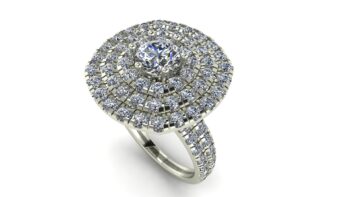
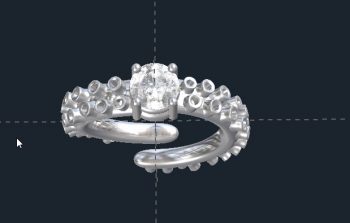
We had a customer with a bunch of old jewelry that she wanted repurposed into something new. This is a spin on that ring.


